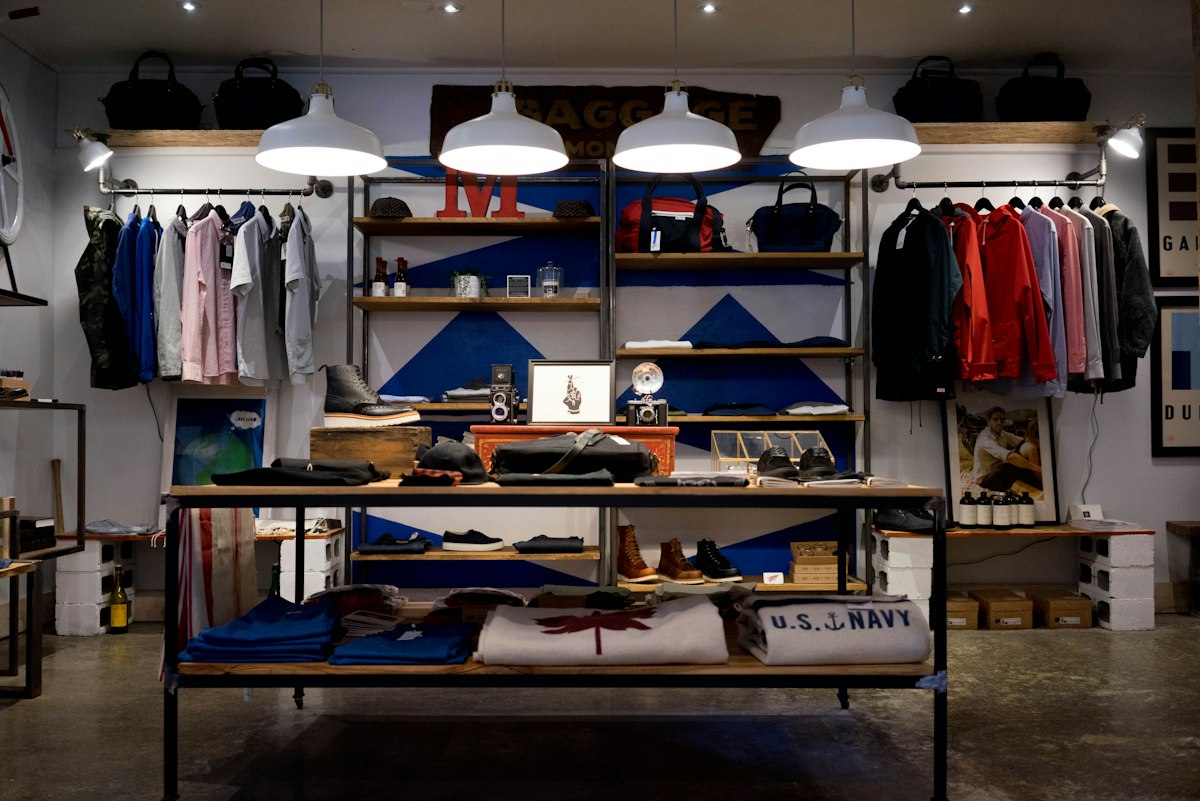
In retail, design = revenue. Your store's layout, lighting, finishes, and customer flow directly affect how long people stay, what they touch, and whether they buy. At Dhanvique, we design commercial interiors—retail stores, showrooms, boutiques, and flagship outlets—that merge brand storytelling with data-driven space planning.
This guide will walk you through the core principles of commercial interior design and give you actionable strategies for creating spaces that attract, engage, and convert visitors into buyers—across Delhi NCR and beyond.
Quick takeaways (retail design essentials)
- Customer journey drives the layout—plan entry, flow, discovery, decision, and checkout.
- Lighting is 70% of the impact—focus on accent lighting for key products.
- Use the decompression zone (entrance space) wisely—no selling in the first 10 feet.
- Design for operational efficiency (staff movement, security, inventory flow).
- Choose durable, easy-clean finishes—retail interiors take more abuse than homes.
Psychology of retail design (why layout matters)
Successful retail design leverages behavioral psychology to guide customers naturally. Key principles include:
- Decompression zone: The first 10–15 feet inside a store—customers adjust to the environment and often miss promotions here. Keep it open, clear, and welcoming.
- Right-turn tendency: Most customers naturally turn right after entering—place high-margin or hero products on the right side.
- Power walls: The first wall customers see (usually the right wall) is your highest-value display location.
- Speed bumps: Strategically placed displays, feature tables, or product islands that slow customers and increase engagement time.
"Great retail design is invisible—customers don't notice the design, they just feel drawn to explore, touch, and ultimately purchase."
Customer journey mapping (from entry to checkout)
Map the customer journey in stages and design for each stage intentionally:
- Arrival + Entry: Facade visibility, entrance design, decompression zone (transition space).
- Discovery + Exploration: Layout flow, clear sightlines, touchable displays, product hierarchy.
- Consideration: Seating (if applicable), trial areas, lighting that shows products accurately.
- Decision: Mirrors, staff zones nearby, product info clarity.
- Checkout + Exit: Efficient queue management, impulse displays near billing, comfortable exit flow.

Store layout types (choose based on product type)
Different retail layouts serve different goals. Here's how to choose:
| Layout type | Best for | Key benefits |
|---|---|---|
| Grid Layout | Supermarkets, pharmacies, hardware stores | Familiar, organized, efficient shelving; easy restocking |
| Loop / Racetrack | Department stores, electronics, home furnishing | Defined path exposing customers to maximum products |
| Free-Flow | Boutiques, jewelry, fashion, premium brands | Creative, exploratory feel; no forced path |
| Angular / Diagonal | Specialty stores, beauty, accessories | Angled displays create interest and intimacy |
Lighting strategy for retail (accent + control)
Lighting is one of the most powerful (and underutilized) tools in commercial design. A strong strategy includes:
- Ambient lighting: General visibility—don't go too bright or customers feel rushed
- Accent lighting: Focused spotlights on hero products, feature walls, or key displays (this is where 70% of your lighting impact comes from)
- Task lighting: At checkout, trial rooms, consultation desks
- Decorative lighting: Reinforces brand identity (pendants, LED panels, signage backlights)
Pro tip: Warm lighting works best for fashion/apparel, while neutral lighting is better for electronics/tech (color accuracy matters).
Material & finish selection (brand positioning)
Materials communicate your brand instantly. Choose based on your positioning and durability needs:
- Luxury brands: Marble, brass, velvet, dark woods, polished finishes
- Contemporary/modern brands: Concrete, steel, glass, minimalist matte surfaces
- Eco-conscious brands: Reclaimed wood, natural fibers, sustainable certifications
- Tech/premium electronics: White/grey surfaces, LED integration, clean geometric lines
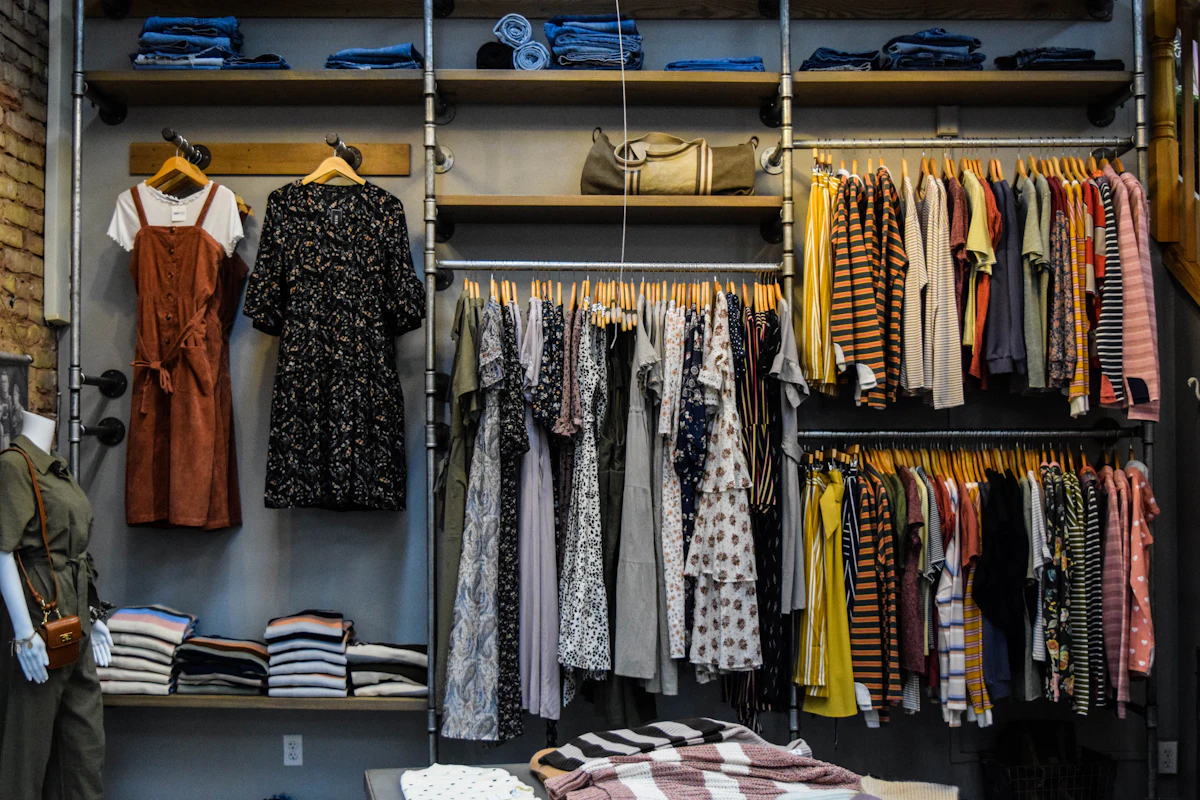
Types: boutique, showroom, mall outlet (different requirements)
1) Boutique / Standalone stores
Complete control over facade, entry, and flow. Use street visibility, a strong window display, and a unique brand experience. Boutiques succeed with personalized touch and curated product display.
2) Showrooms (cars, furniture, electronics)
Product focus is key—design should not compete for attention. Include consultation zones, demo areas, and comfortable waiting spaces. For car showrooms, flooring durability and lighting accuracy are critical.
3) Mall outlets / chain stores
Must work within mall guidelines (fire, signage, structural limits). Focus on consistent brand identity, efficient turnover, and fast adaptation to seasonal campaigns. Mall stores also need faster throughput planning.
Durability & compliance (Delhi NCR requirements)
Commercial spaces need stronger specs than residential:
- Fire safety compliance (NOC, extinguishers, exits, signage)
- Anti-skid, easy-clean flooring (high foot traffic + spills)
- Commercial-grade hardware (soft-close + heavy-duty hinges)
- Durable paint systems (washable, scuff-resistant)
- HVAC + ventilation (customer comfort + condensation control)
- Electrical load planning (lighting + equipment + backup)
Success metrics to track (design performance)
After your store opens, track these metrics to see if the design is working:
- Dwell time: How long customers stay (longer = more opportunity to browse/buy)
- Conversion rate: Visitors → buyers (good design increases conversion)
- Traffic heatmap: Which zones get the most attention (use to optimize display placement)
- Staff efficiency: Can staff move easily, restock quickly, and assist customers?
- Product touch rate: Are customers engaging with products or just walking past?
FAQs
How long does a retail interior project take?
Timeline depends on scope and approvals. Small boutique fit-outs can complete in 4–8 weeks; large showrooms may take 3–6 months including design, compliance, procurement, and execution.
Can I use the same designer for my store and my home?
Not always. Commercial design focuses on customer experience, durability, and compliance—different priorities than residential comfort. Look for designers with proven retail/showroom portfolios.
What's the budget for a retail interior in Delhi NCR?
Depends on size, finishes, and custom elements. Budget projects start with paint + lighting + fixture refresh. Premium projects include custom millwork, branded elements, and feature installations. Get a detailed BOQ for clarity.
Why choose Dhanvique for commercial interiors?
At Dhanvique, we combine design expertise with retail strategy. We translate brand identity into spatial design, map customer journeys for optimized layouts, design custom fixtures and displays, plan lighting that maximizes product appeal, and execute turnkey projects with minimal disruption to business.
Planning a retail store or showroom in Delhi NCR?
Let us help you design a space that drives revenue and strengthens your brand. Contact Dhanvique for a consultation.